



The standard-compliant planning and installation of floor drains is essential for functional and hygienic building drainage. A central element of this is the odour barrier/trap, which prevents unpleasant sewer gases from entering interior spaces. The new standard EN 1253 Parts 6, 7 & 8 has for the first time created clear regulations for various types of odour barriers that have proven themselves in practice. In this article, we show which solutions are covered by the standard and what effects this has on the planning and design of floor drains.
Floor drains are an important part of building drainage as they efficiently drain water from wet rooms, WCs and various other secondary rooms into the sewer system. Modern floor drains not only serve as a connecting element between the sewer pipe and the drainage surface, but must also offer the option of being integrated into the surface sealing. However, the most important component of a floor drain within a building is the odour barrier.
Odour traps play a central role in building and drainage technology by preventing unpleasant odours from the sewer system from entering interior spaces. They are essential for hygienic and health standards in residential and commercial buildings. A comprehensive standardised regulation for floor drains and their odour traps is therefore necessary to ensure that they are manufactured, planned and installed correctly in practice.
Product standard vs. application standard
EN1253, which consists of eight parts, is a European product standard that specifies the technical requirements for odour traps, including material properties, design, functionality and test methods. It defines which criteria a product must fulfil in order to be considered standard-compliant. This product standard does not specify how and where the floor drains are to be used. The new parts 6, 7 & 8 of EN1253 were published in 2023 and serve as a supplement to the long-existing EN1253 Part 1 ‘Water odour traps of at least 50 mm’ (see EN1253 Part 1).
The national user standards (in Austria, for example, ÖNORM B2501-2025) then regulate how and where the products may be used in practice. It contains specifications for the correct installation, use and maintenance of the products in buildings so that standard-compliant and safe use is guaranteed.
However, as EN1253 Part 6, 7 & 8 is a relatively new standard and the national standards are sometimes late in implementing the innovations, the product standard EN1253 (Part 6, 7 & 8) also provides guidelines for the application of the products.
Product standard EN 1253- What’s new?
EN1253 Part 1 has existed since 2015 and has always defined requirements for drains in buildings, specifically in Part 1: floor drains with an odour trap with an odour trap height of at least 50 mm. Odour traps of a different design, such as a flat design (lower odour trap height) or with a mechanical barrier, were not included or considered anywhere.
In practice, however, there are always cases in which a floor drain with a 50 mm trap height cannot be realised (e.g. due to a low floor structure). Over the last two decades, more and more products have therefore become established on the market which, although frequently used in practice, are not covered by the standard. From pure water odour barriers with less than 50 mm of sealing water to purely mechanical odour barriers (designed with flaps or membranes) to combined or hybrid odour barriers (mechanical + sealing water), a proliferation of products has emerged that are not regulated by standards.
As practice has moved too far away from the standard here, it was important to close the gap between the standard and practice, to include alternative odour barriers in the standard and to define criteria for these. The most important new feature of EN1253 is therefore the standardised regulation of floor drains with odour traps that do not meet the 50 mm sealing water requirement.
As of 2023, the following categorisation applies to floor drains in buildings according to EN1253:
- Part 1: Floor drains with water odour barrier with an odour barrier height of at least 50
- Part 2: Roof drains and floor drains without odour trap (external drainage)
- Parts 3-4: These are not separate categories, but deal with the conformity and testing of the products (not covered in the rest of the text)
- Part 5: Drains for light liquid barriers (not included in the rest of the text)
- Part 6 (new): Floor drains with water odour barrier with a barrier water height of less than 50 mm
- Part 7 (new): Floor drains with mechanical odour barrier
- Part 8 (new): Floor drains with odour barrier with a combination of mechanical odour barrier and sealing water
To ensure that the various floor drains also fulfil the basic requirements of the standard, they must of course be tested in accordance with the standard specifications (e.g. pressure test).
Application of the odour barrier types
EN1253 now also makes recommendations as to when which odour trap may be used or applied. However, the national user standards deviate in part from the application recommendations described here.
Part 1 – Floor drains with water odour barrier with an odour barrier height of at least 50
Floor drains with odour barriers with an odour barrier height of at least 50 mm may always be planned and installed without restriction if there is no risk of the odour traps drying out.
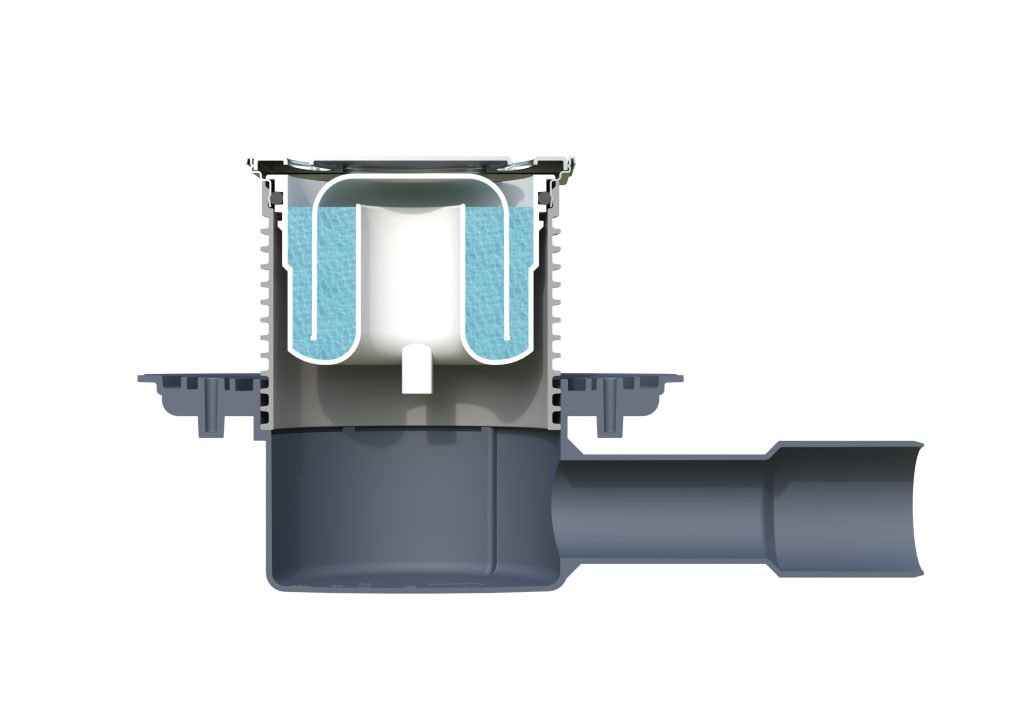
Part 6 – Floor drains with water odour barrier with a barrier water height of less than 50 mm
Floor drains with odour barrier with a sealing water height of less than 50 mm should only be installed if a sealing water height of 50 mm is not possible due to the floor structure being too low. A number of conditions must also be met:
- At least two other drainage objects are connected to the collective connection pipe, whereby a maximum of one WC may be included, or
- Secondary ventilation is available
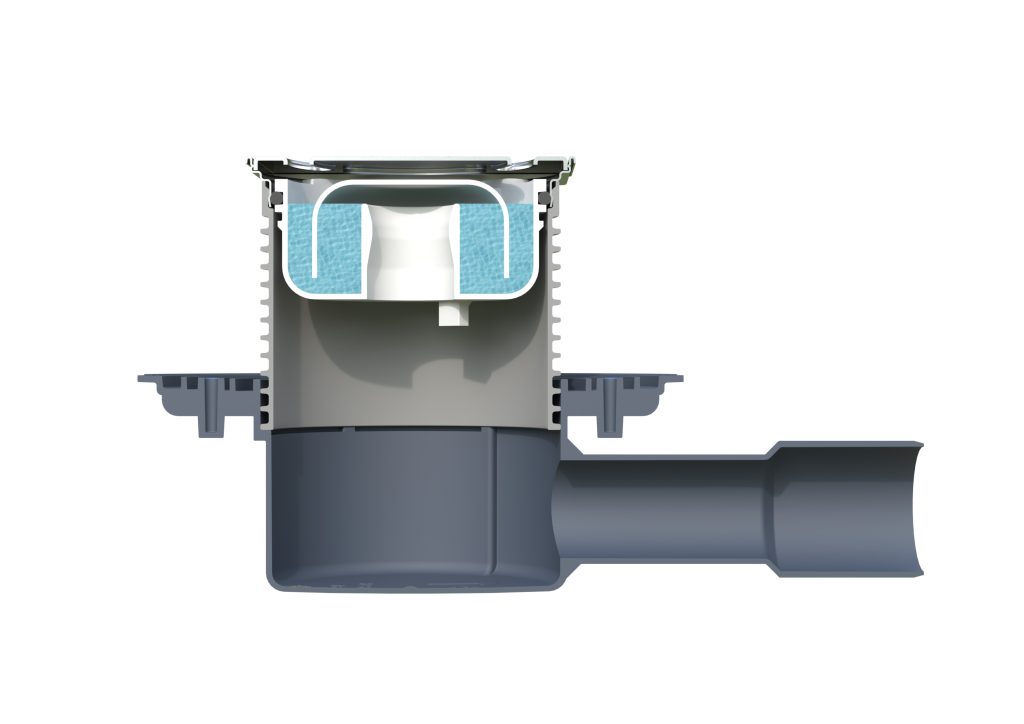
Part 7 – Floor drains with mechanical odour barrier
Floor drains with mechanical odour barriers are only permitted in buildings with a maximum of four storeys. In addition, they may only be used if the odour barrier could easily dry out due to infrequent use.
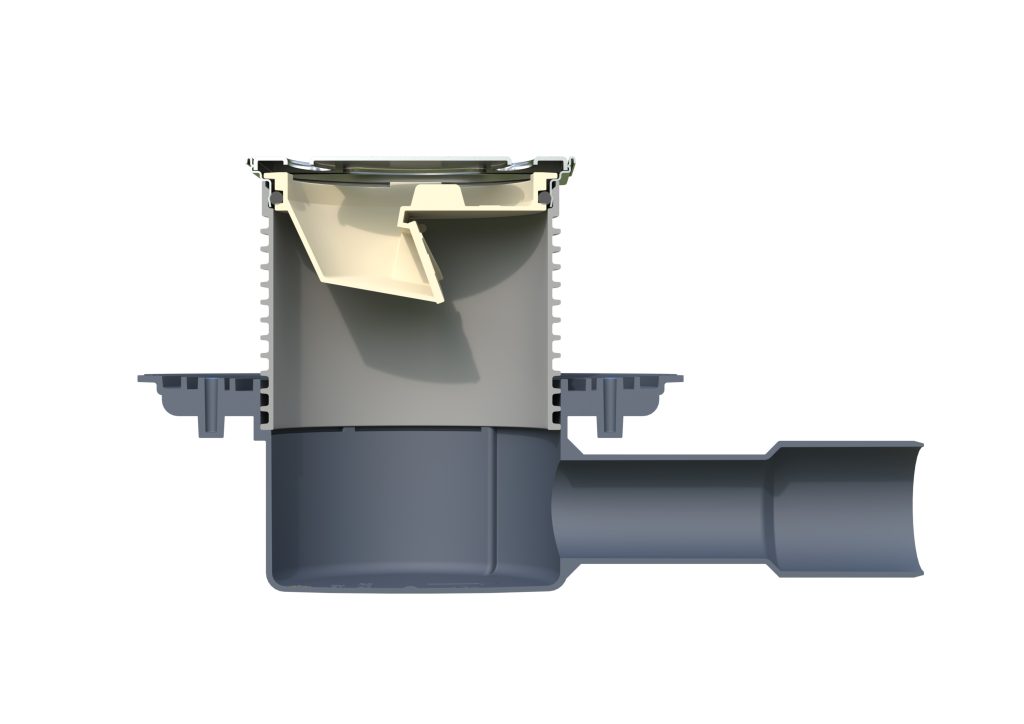
Part 8 – Floor drains with odour barrier with a combination of mechanical odour barrier and sealing water
Floor drains with odour barrier with a combination of mechanical odour barrier and sealing water are also only intended for buildings with a maximum of four storeys.
Our ‘Primus blue’ odour barrier insert, which is installed in numerous HL floor and shower drains (all article numbers with the suffix ‘Prblue’), complies with Part 8 of the standard (combined/hybrid odour traps). Thanks to their special design, the ‘Primus blue’ traps are equivalent to a normal 50 mm trap in terms of resistance to under/overpressure or drying out – with a significantly lower overall height. Our many years of experience with this patented odour barrier show that all ‘Primus blue’ drains can also be used in buildings with more than four storeys without any problems. Our application engineering department or our regional field service can issue a project-specific approval on request. Please contact us by e-mail.
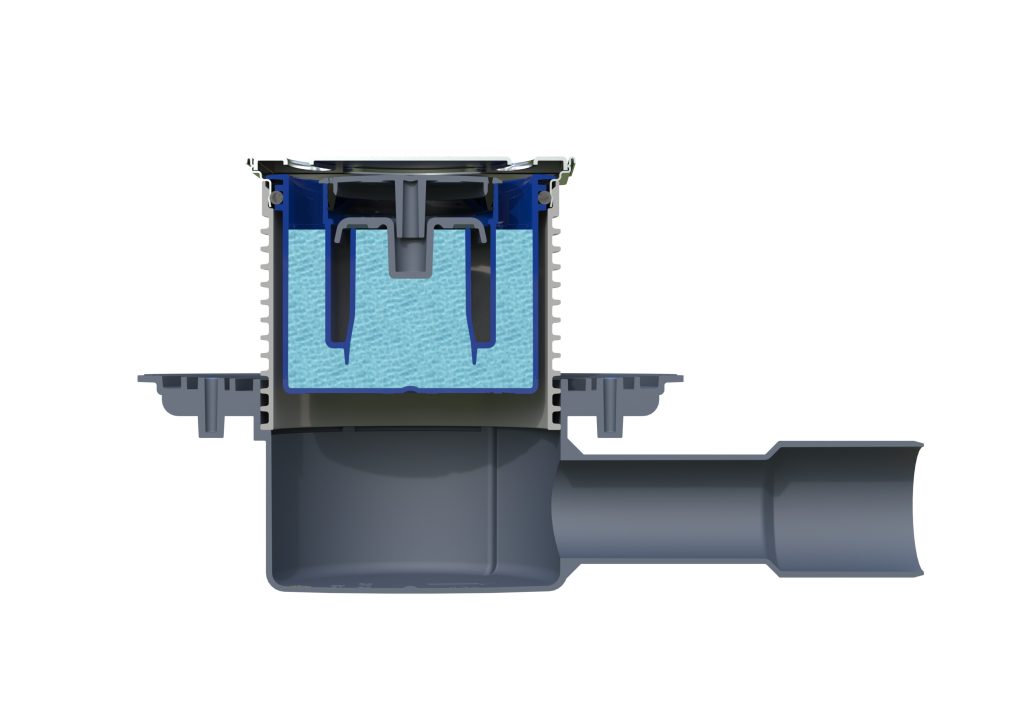
The combined or hybrid odour barriers also have the advantage that they provide a mechanical odour trap in addition to the sealing water and are therefore also recommended for rooms where the odour barrier may dry out frequently (e.g. technical room or basement shower).
Summary
With the revised EN 1253, there are now clear regulations for the planning and use of various floor drains and their odour barriers. While drains with classic 50 mm sealing water can still be used, solutions with a lower sealing water height as well as mechanical and combined odour traps have now also been standardised. This closes the gap between previous standard specifications and proven practice.
This means more certainty for planners and installers when selecting suitable products. Particularly noteworthy are the hybrid/combined traps (in accordance with Part 8 of EN 1253), which can withstand high overpressure and underpressure even at lower installation heights and offer additional protection against bad odours when they dry out.