Survey
of the day

Siphoners have their say!

Autoren

Cengiz Kulaksiz

I started working in the HKLS industry in 1997 and have been discussing correct drainage with customers on a daily basis since 2008, so I would like to share my experiences with you at this point. At the same time, as a long-standing member of the Austrian Standards Committee, I keep myself informed about future challenges in building drainage.

Newsletter

Yes, I want to become a siphon technician

I hereby subscribe to the free newsletter to be informed about new articles and to receive further benefits.

The Critical 1% That Cause 90% of Water Damage

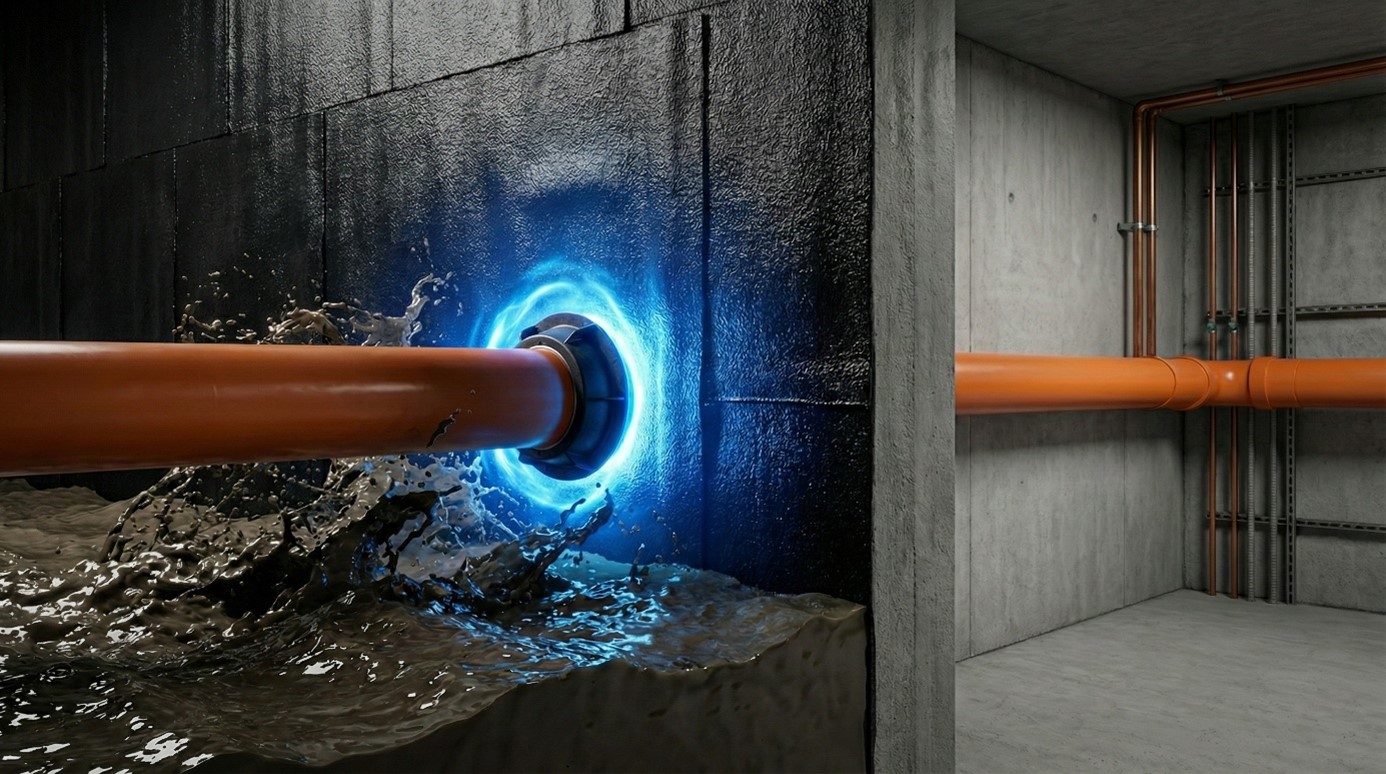
Water is the greatest enemy of a building’s structure. Around half of all structural damage can be attributed to the effects of moisture. Particularly at risk are the 1% of waterproofing areas involving transitions, penetrations and connection details – especially pipe penetrations. This technical article explains the fundamentals of structural waterproofing in accordance with ÖNORM B 3692, describes typical damage mechanisms and shows how modern solutions such as the HL800 series and HL804H enable safe, standard-compliant and plannable sealing of pipe penetrations today.

Why waterproofing determines the success of a building

Water is omnipresent in construction and at the same time one of the most common causes of structural damage. Up to 50% of all defects in buildings can be directly or indirectly attributed to moisture (Source: derStandard Bauschadesbericht). What makes this particularly insidious is that in many cases moisture penetrates the structure unnoticed and only becomes visible much later.

For planners, contractors, installers and building owners, this means that waterproofing is not merely a peripheral detail but a central component of building protection.

The most sensitive areas are those where different building components and trades meet – connections, transitions, joints and in particular pipe penetrations. They make up only a small proportion of the sealing surface, yet cause the majority of damage and therefore also the highest refurbishment costs.

Careful and systematic detail planning is therefore essential to prevent moisture from entering the structure in the first place.

What types of damage occur and why?

Moisture-related damage generally occurs in two ways. One is acute water ingress, for example due to flooding, backflow, water under hydrostatic pressure or pipe defects. Such damage is immediately visible and comparatively easy to identify.

Far more insidious is gradual moisture ingress. Capillary migration of moisture along pipes, moisture penetration into floor structures, mould growth or corrosion often develop unnoticed over long periods of time and cause considerable consequential damage.

How severely a building is affected depends largely on the construction method. Timber and lightweight constructions are particularly sensitive, masonry transports water by capillary action and even reinforced concrete can be damaged by corrosion of the reinforcement. Even watertight concrete remains vulnerable, particularly at connections and penetrations.

If the waterproofing system fails, renovation is usually complex. Components must be exposed, dried and reconstructed by several trades. The cost of renovation often far exceeds that of carefully planned waterproofing at an early stage.

The best refurbishment is the one that never becomes necessary.

Welche Bereiche eines Gebäudes müssen abgedichtet werden?

A building has numerous potential weak points through which water can enter:

  • Transitions between foundation slab and wall
  • Basement walls
  • Foundations
  • Horizontal and vertical connections
  • Terraces
  • Roofs
  • All penetrations, especially media pipes for drainage, water, electricity or cables


Each of these locations represents a potential entry point for moisture if it is not planned and executed in accordance with standards.

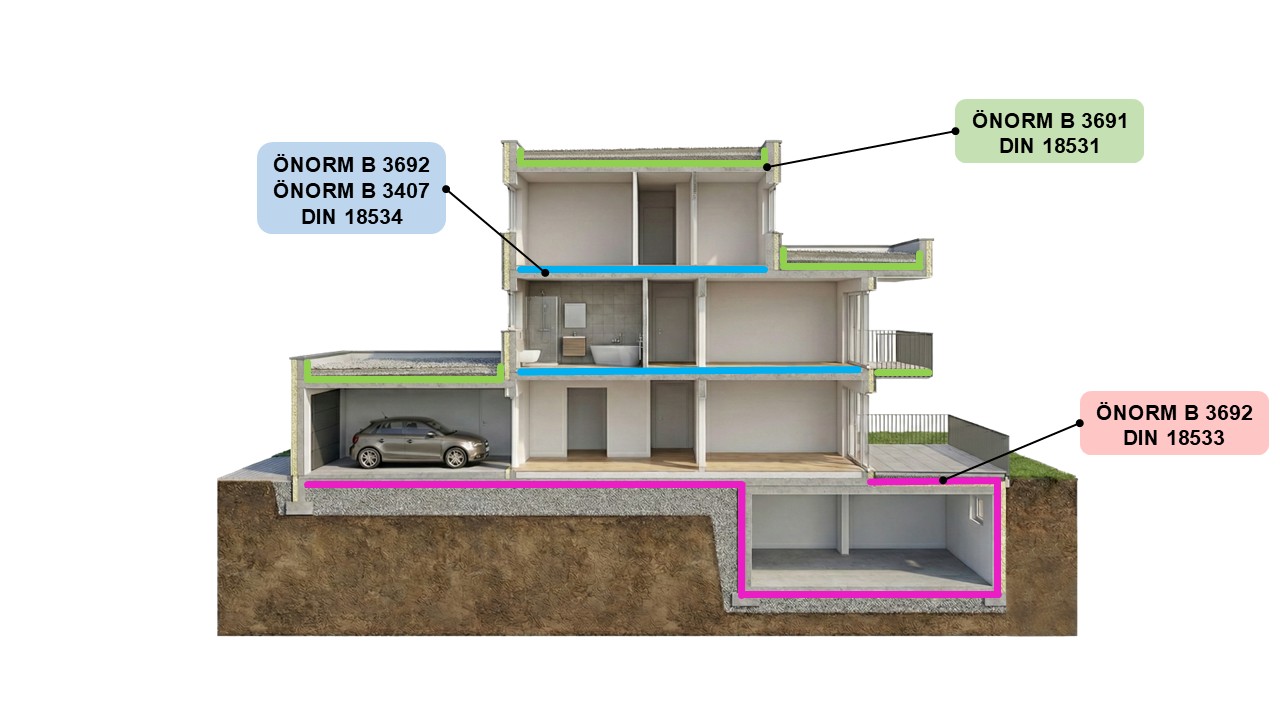
While DIN18531 deals with roof waterproofing and DIN18534 regulates waterproofing in building construction, DIN18533 is decisive for building components in direct contact with the ground. Especially where buildings and soil meet, moisture loads are highest and the requirements for a permanently functional sealing system are correspondingly demanding.

Figure 1: Relevant standards for waterproofing

DIN18533: The central standard for waterproofing of building components in contact with the ground

DIN 18533 defines four load cases describing the relevant water and moisture impact on building components in contact with the ground. Determining the correct load case is one of the most important steps in waterproofing design, as it determines which waterproofing systems, material thicknesses and layer structures are required.

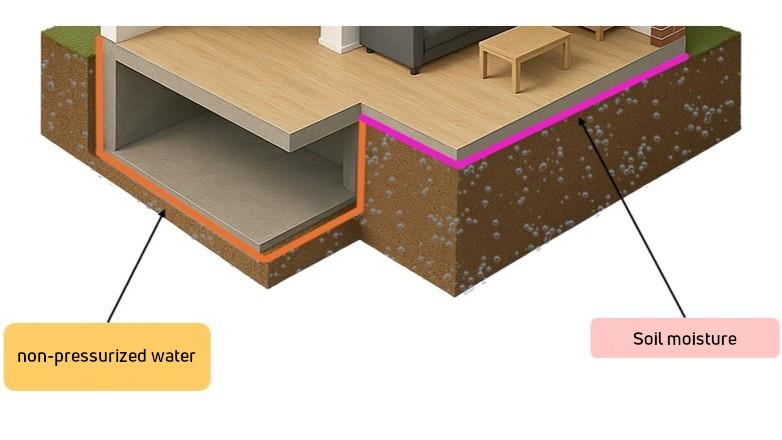
Load case 1 – Soil moisture

Soil moisture is present when only capillary moisture exists in the soil and water can seep away without accumulation. In this case, waterproofing systems primarily serve as a moisture barrier. Two-layer bituminous waterproofing systems or suitable plastic membranes are usually sufficient. Connections, plinth areas and pipe feed-throughs must nevertheless be professionally executed.

Load case 2 – Non-pressurised water

Non-pressurised water occurs when water reaches the building component without building up hydrostatic pressure, for example in cohesive or poorly permeable soils. Transitions and pipe feed-throughs must be carefully planned, as laterally penetrating moisture tends to enter at these points.

Figure 2: Load case with soil moisture and non-pressurized water

Load case 3 – Pressurised water

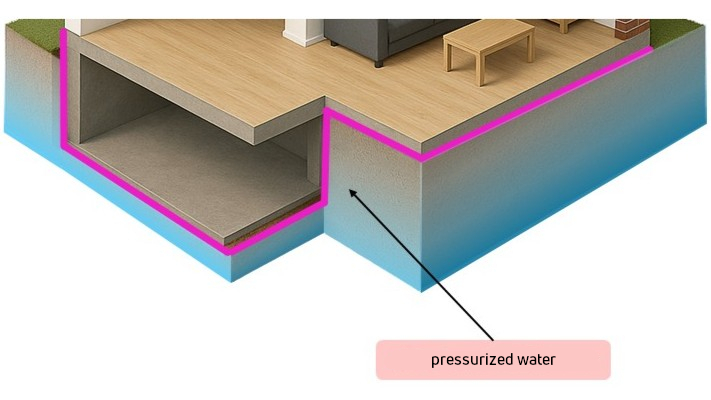
Pressurised water is present when water permanently or temporarily exerts hydrostatic pressure on the waterproofing system. Waterproofing systems must therefore be particularly pressure-resistant, multi-layered and resistant to movement at transitions.

Even in watertight concrete constructions, additional measures are required at connection points and pipe penetrations, as concrete alone cannot guarantee continuous sealing.

Figure 3: Load case with pressurized water

Whether a structure is constructed as a “white tank” made of watertight concrete, as a “black tank,” or as a combination of both systems depends largely on the load case. Even in watertight concrete structures, additional measures are required at connection points and penetrations, as concrete alone cannot guarantee a complete seal.

Load case 4 – Radon

Radon is a naturally occurring, invisible, odourless and radioactive noble gas that forms in the ground. It can rise to the surface through pores, cracks and cavities and enter buildings through leaks such as joints or pipe feed-throughs in building components in contact with the ground.

Radon poses a serious health risk to occupants and is considered one of the leading causes of lung cancer after smoking. To protect occupants, ingress must be prevented by means of convection-tight sealing.

It is important to note that waterproofing against water does not automatically provide protection against radon.

Critical points in the waterproofing layer

DIN18533 clearly shows that most moisture damage does not occur on large sealing surfaces but at the details. Transitions between foundation slab and wall, corners, steps, upstands and especially pipe penetrations are critical areas, as different materials, movements and loads come together here.

Pipe penetrations are particularly critical because they interrupt the waterproofing layer while simultaneously forming an interface between several trades.

Improvised solutions often cause damage because they are neither sufficiently pressure-resistant nor convection-tight. The standard therefore emphasizes the need for a permanently tight connection to the waterproofing layer.

Pipe penetrations in individual load cases

The requirements for pipe penetrations vary considerably depending on the load case. A basic distinction is made between horizontal penetrations in exterior basement walls and vertical penetrations through the floor plate.

1. Horizontal pipe penetrations – basement exterior wall (“black tub”)

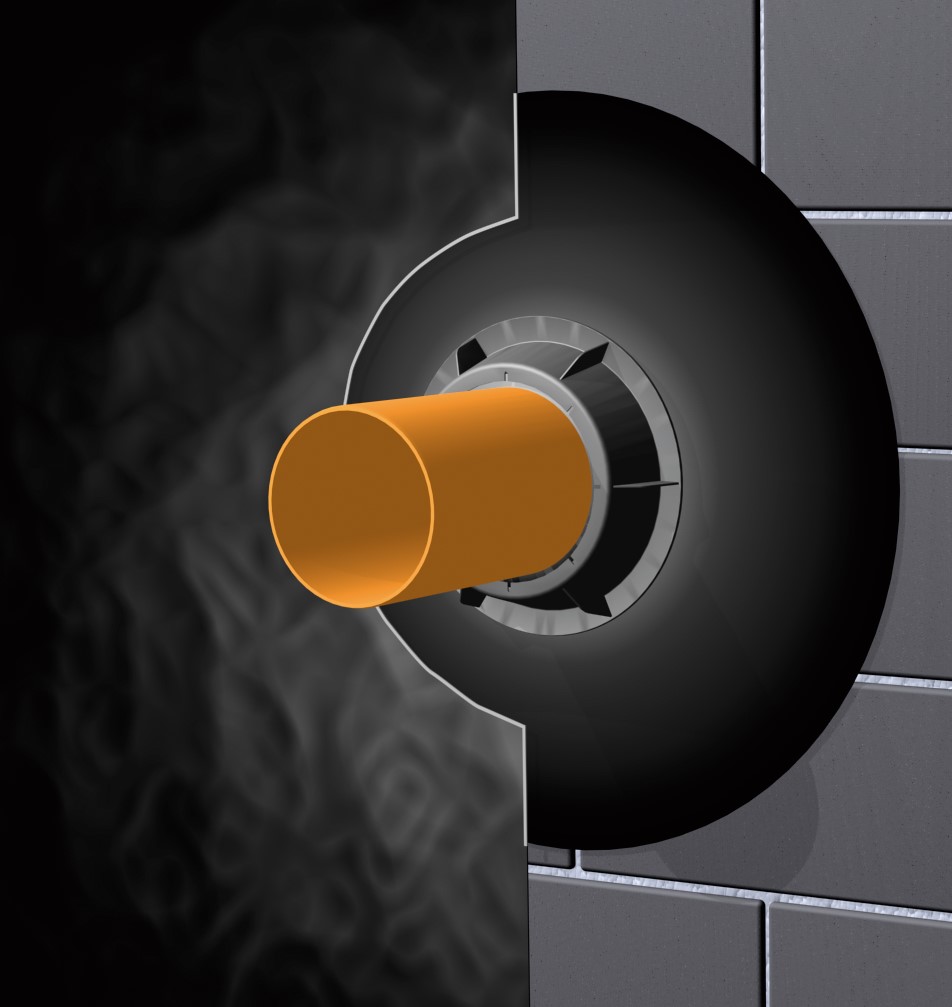
Horizontally laid pipes such as sewage, water, or energy pipes must be securely integrated into the exterior waterproofing.

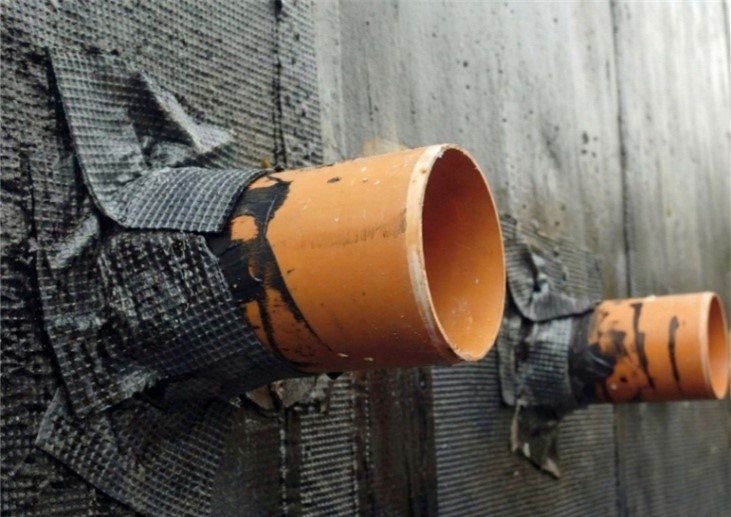
With horizontal pipe penetrations in walls in contact with the ground, there is a high risk of water penetrating the building through inadequately sealed connections. Conventional solutions carried out on site by craftsmen depend heavily on the care taken by the person carrying out the work and do not offer reproducible quality. Even small execution errors or inaccurate connections can lead to moisture getting behind the waterproofing – with long-term damage to the wall, insulation, and building structure.

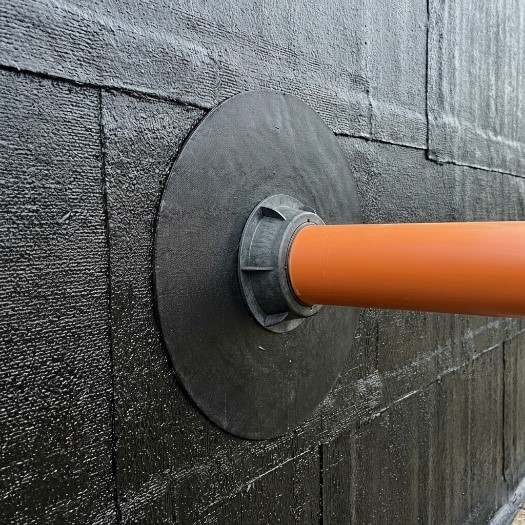
Figure 4: Horizontal pipe penetration with professionally executed pipe seal (HL800)
Figure 5: Horizontal pipe penetrations with inadequate sealing

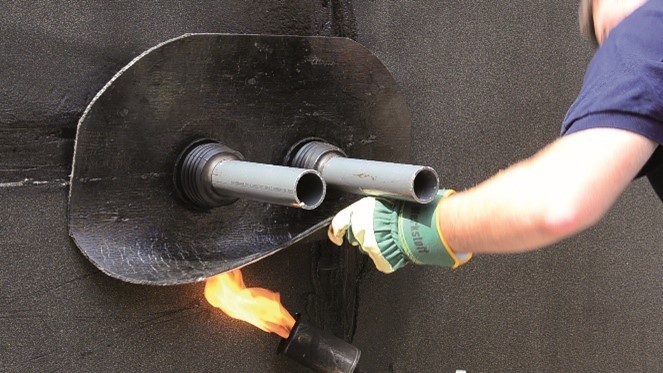
The HL800 series is ideally suited for this application and has a factory-welded bitumen membrane for standard-compliant connection to the building waterproofing on exterior basement walls.

Ground moisture & non-pressurized water:
HL800 can be used without restrictions. Tightness and connectivity are guaranteed.

Pressurized water:
Although the HL800 pipe seal has been successfully tested up to 0.6 bar (≈ 6 m water column) and has proven itself in practice, it does not currently comply fully with product standards for applications with pressurized water, as it lacks a standard-defined flange geometry (metallic loose-fixed flange construction). The HL800 pipe seal can still be used in such situations, but as with all sealing details, the planning should take into account the respective standard requirements and the project-specific boundary conditions.

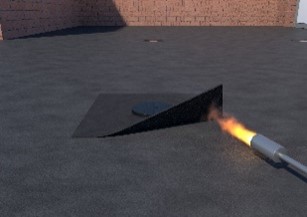
Figure 6: Flame treatment on a bitumen sleeve
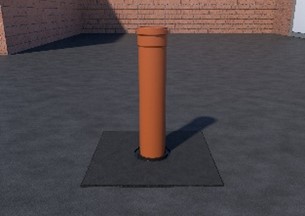
Figure 7: Installation of the HL800 pipe seal
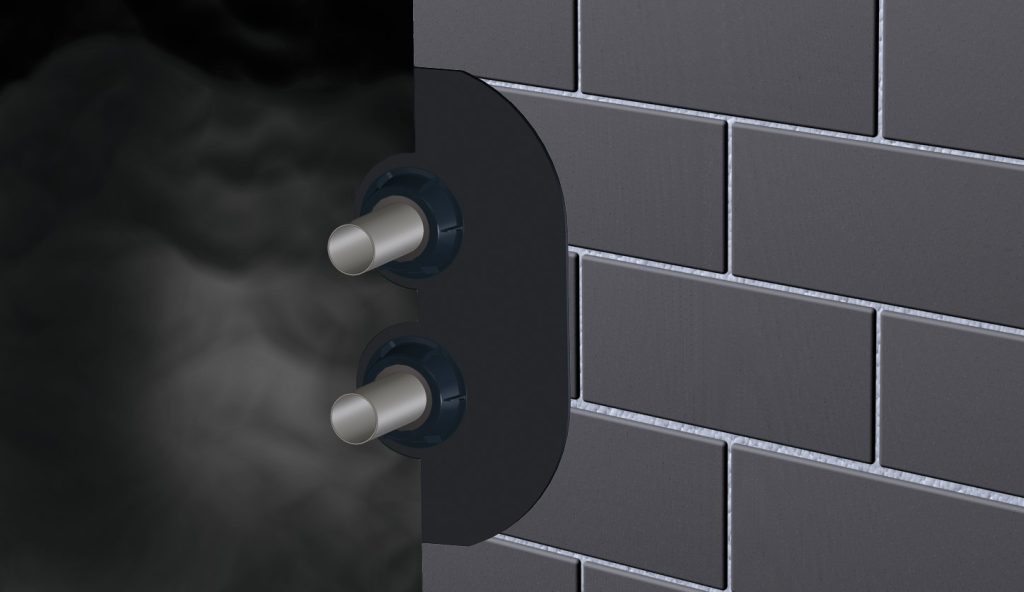
Figure 8: Installation of the HL800.2 double pipe seal
Figure 9: Installation of the HL800 pipe seal including the HL801 multiple pipe feed-through

Radon:
The HL800 pipe seal has been tested for radon tightness and is suitable for use in radon-contaminated locations.

2. Vertical pipe penetrations – foundation plates / interior area

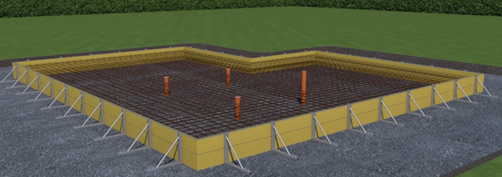
Figure 10: Cast foundation slab with vertical pipe penetrations

Vertical penetrations are particularly sensitive, as they break through the horizontal sealing level and can transport moisture along the pipe by capillary action.

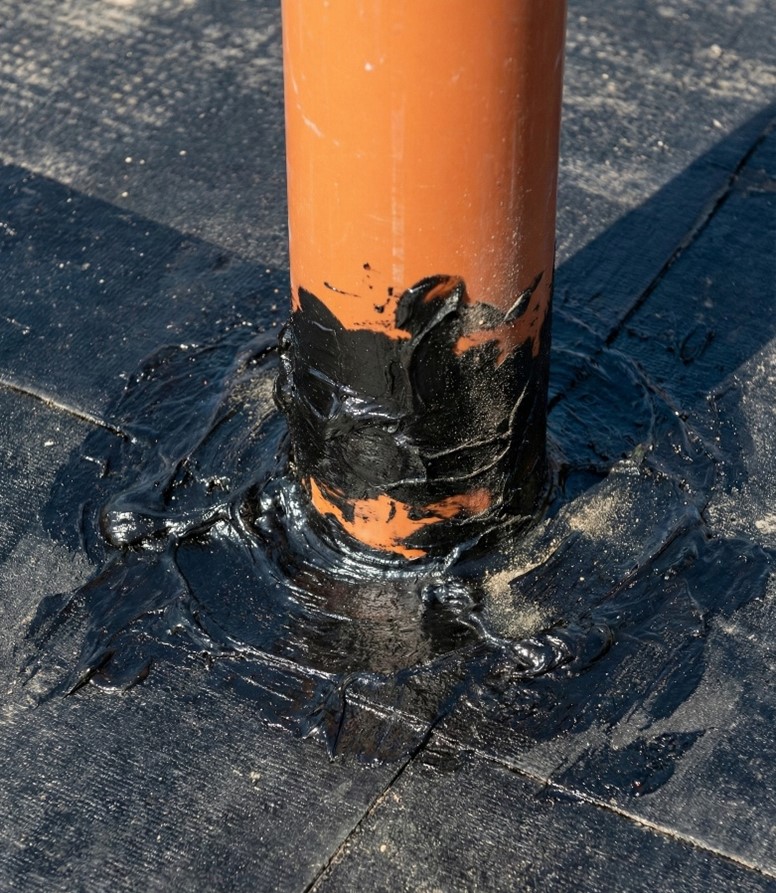
Traditionally, vertical pipe penetrations are sealed to foundation plates with KMB or liquid plastics (see illustration). However, this approach is neither systematic nor plannable, as each detail is created individually on the construction site and depends heavily on the craftsmanship involved. In addition, professional sealing would require the sealing compound to be pulled up onto the pipe – a time-consuming step that is rarely possible to implement correctly in practice, especially if the floor structure is too low.

Figure 11: Vertical pipe penetration with inadequate sealing

To make matters worse, pipe sleeves are often embedded flush with the concrete slab and the pipe is only installed later. This creates a gap between the concrete work, waterproofing, and pipe installation, which is a classic risk for leaks and subsequent moisture damage.

The HL804H pipe seal was developed specifically for this application and combines a TPE lip seal with a bitumen sleeve for a secure connection.

Ground moisture & non-pressurized water:
The HL804H pipe seal is the preferred solution for ground moisture and non-pressurized water.

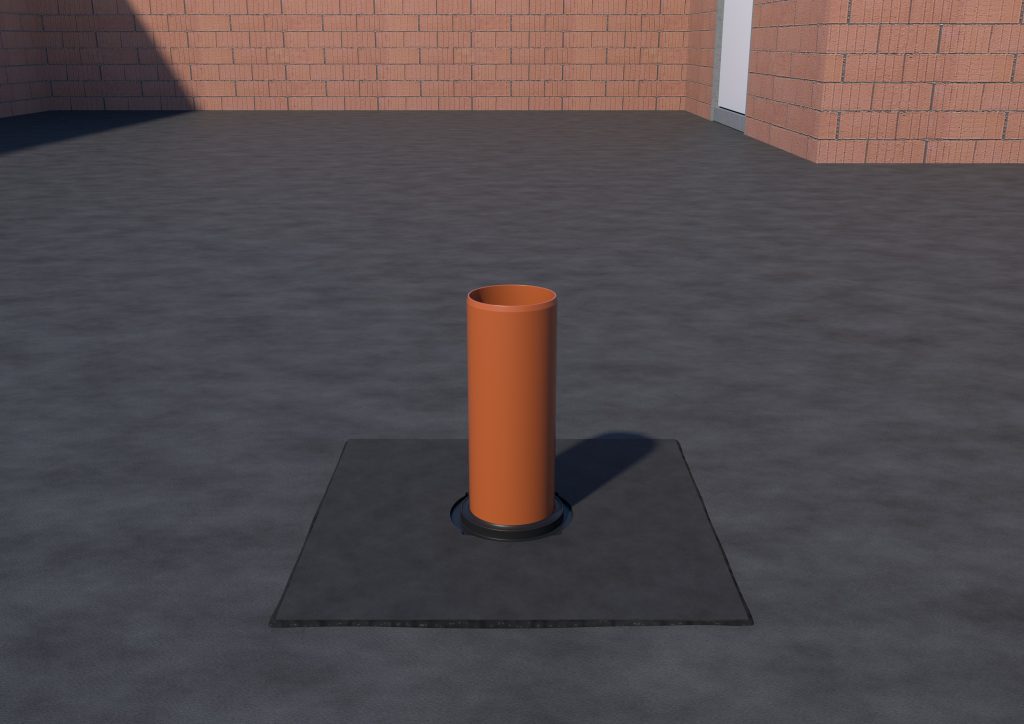
Installation of HL804H

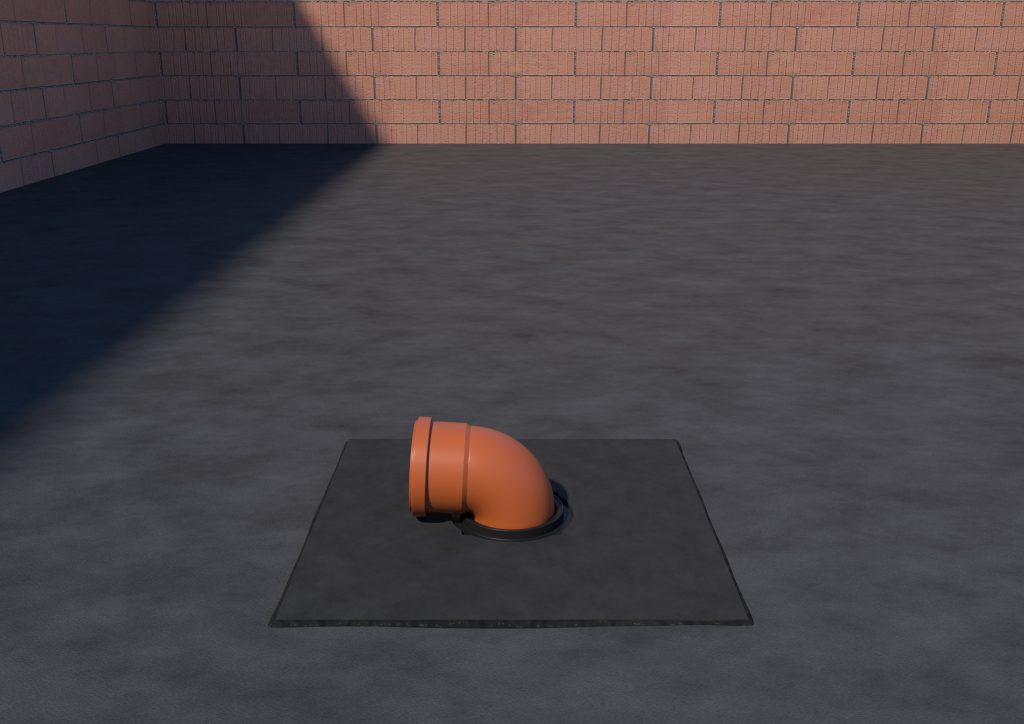
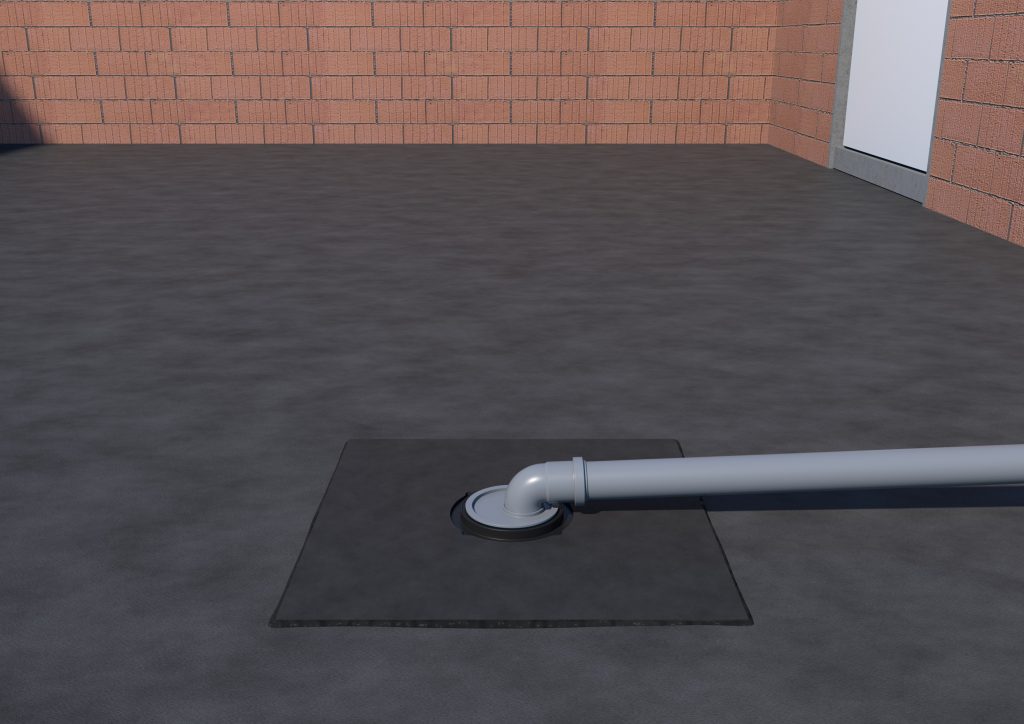
In addition, the HL804H impresses with its low height, which allows the pipe to be led directly out of the pipe socket with a bend. This enables an immediate change in the direction of the pipe without requiring complex installation heights or subsequent adjustments.

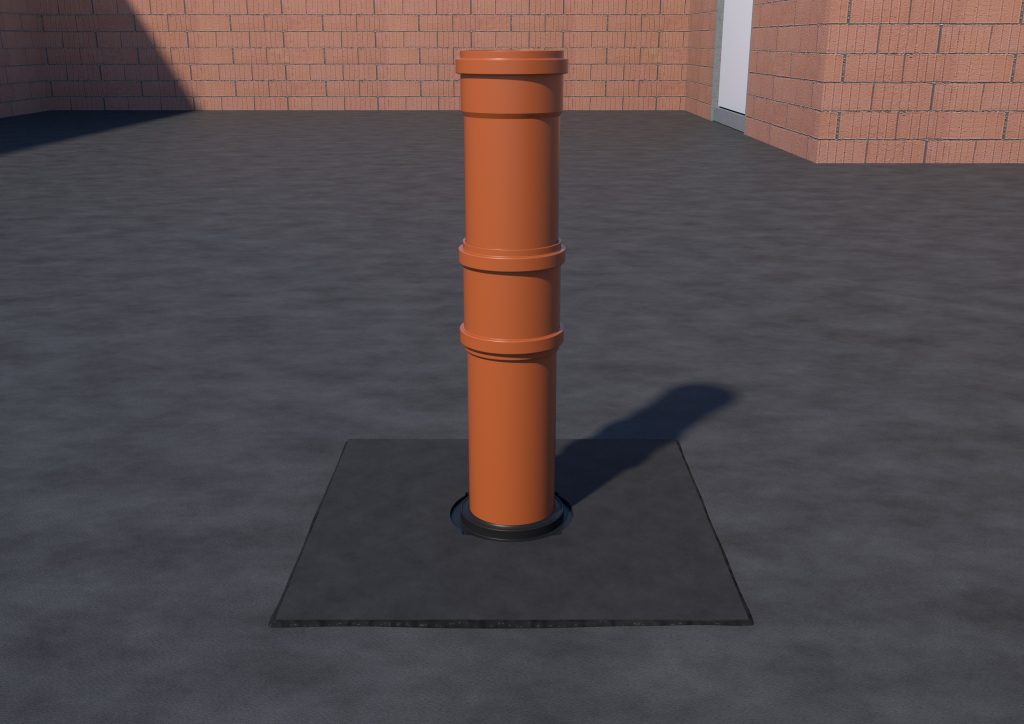
The HL804H pipe seal is suitable for various applications and can be installed both with a socket flush with the concrete and with a flat DN110/50 pipe.

Installation examples for HL804H

In short, the HL804H pipe seal offers a standardized, clearly plannable, and ready-to-use system for vertical pipe penetrations with defined installation conditions, consistently high quality, and a particularly compact height. The HL800 series is also suitable in principle and is suitable for higher water pressures, but differs in terms of height.

Pressurized water:

When water is pressing, the requirements for waterproofing are naturally high. This is a load case that rarely occurs with vertical pipe penetrations in floor slabs, but requires careful, project-specific planning when necessary. For these special situations, there are no separate tests for HL804H and the HL800 series in the “pressurized water” load case. Although the HL800 series has also been tested up to a 6 m water column and has therefore proven itself in practice, the design should be coordinated with the overall waterproofing concept to ensure a permanently secure solution.

Radon:
HL800 and HL804H are radon-tight tested and can also be used for this load case with vertical pipe penetrations. An additional advantage of the HL804H is its particularly low height, which allows installation even with low floor structures and thus offers more flexibility in planning.

Additive solution HL801

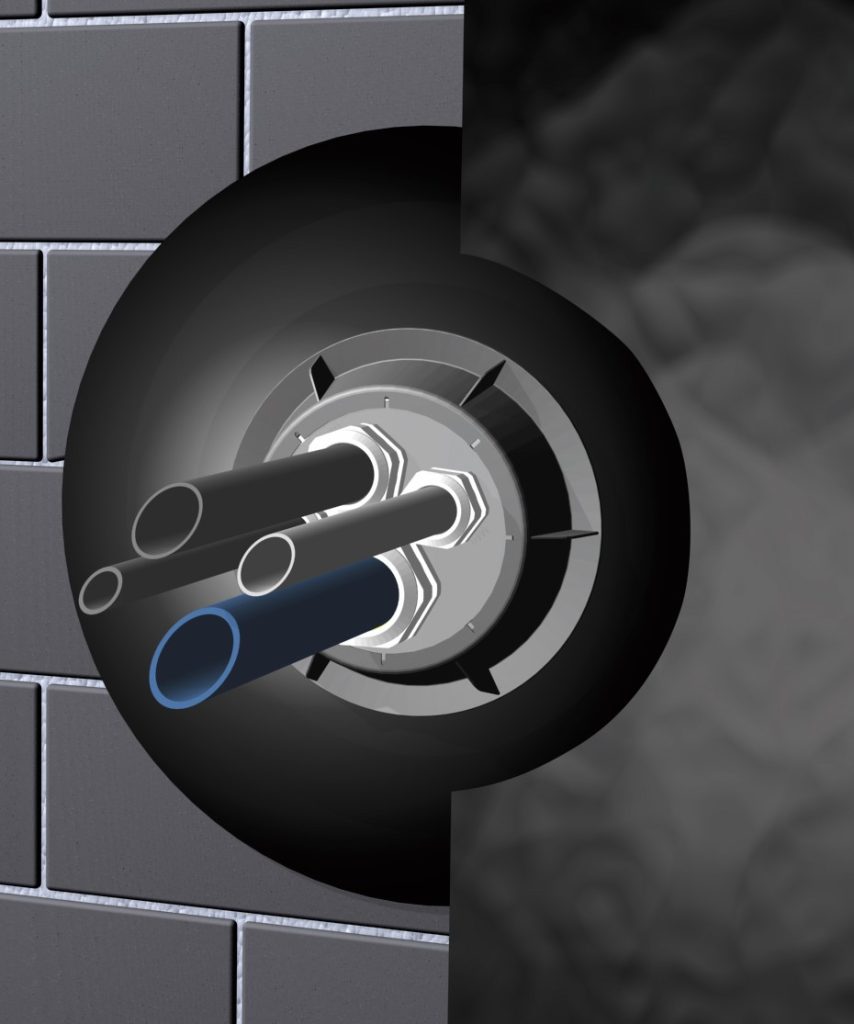
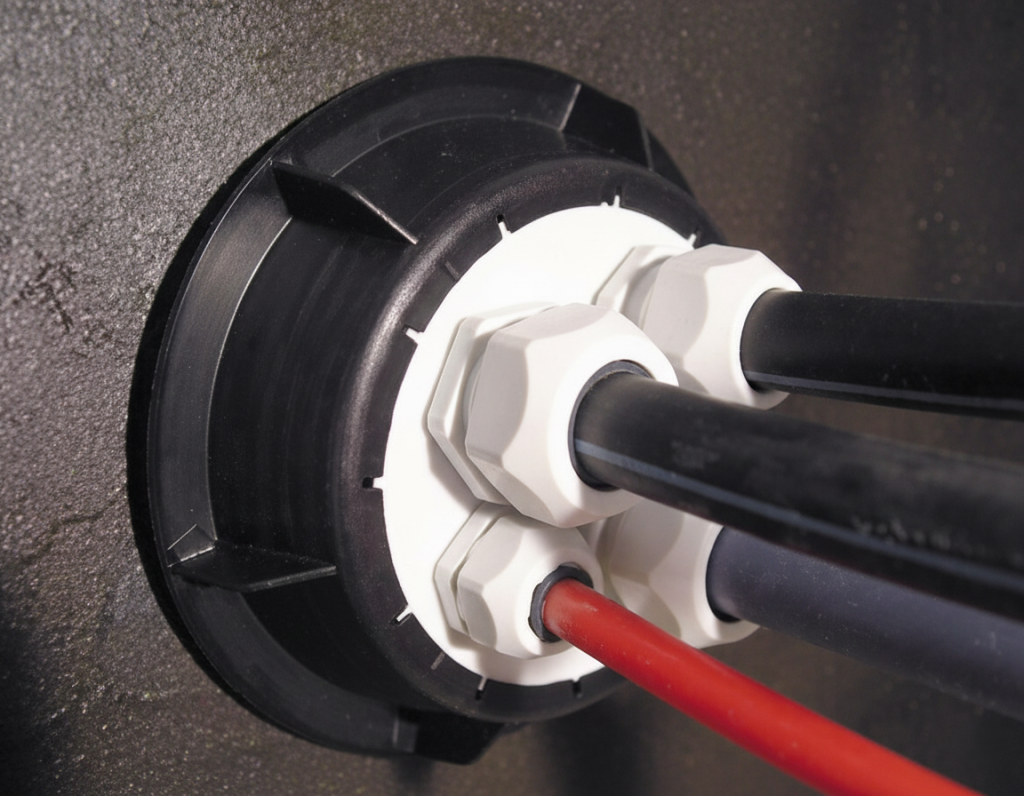
HL801 complements the HL800 system and enables multiple lines to be routed through a single wall opening. It is used wherever power, data, heating, or heat pump lines need to be bundled together. Thanks to integrated predetermined breaking points and matching screw connections, the openings can be flexibly adapted to the required line diameters.

Figure 14: Installation example HL800 with HL801

In addition, a practical calculator for multiple pipe feed-throughs is available at www.hl.at. This helps you select the right item numbers and quickly and reliably determine the correct combination for your individual pipe diameters.

Table 1: Load cases and suitable solutions from HL

Component / Installation Position

load case

Suitable Products

Notes

Basement wall horizontal pipe (“black tub”)

Soil moisture & non-pressurised water

HL800-Series, HL801

Can be used without restrictions

Pressurised water

HL800-Series,

HL801

Tested, but without standard-compliant loose/fixed flange construction

Radon

HL800-Series, HL801

Tested and certified

Foundation slab vertical pipe (interior area)

Soil moisture & non-pressurised water

HL804H, HL800-Series, HL801

HL804H recommended due to low installation height

Pressurised water

HL800-Series, HL801

Tested, but no standardised product norm

Radon

HL804H, HL800-Series, HL801

Tested and certified


Conclusion

The waterproofing of a building has a significant impact on its service life and operational safety. Waterproofing defects are not only costly, but can also jeopardize the entire building structure in the long term. Pipe penetrations in particular require careful planning, as they are the most sensitive details of the waterproofing.

DI18533 provides clear guidelines for planning and execution, depending on the respective load case. With the HL800, HL801, and HL804H pipe penetrations, HL Hutterer & Lechner offers robust, standard-compliant, and field-tested solutions for horizontal and vertical penetrations. Using these systems correctly reduces the risk of moisture damage in the long term and ensures a permanently secure building envelope.

Sources:

  • DerStandard Bauschadensbericht (see above)
  • Austrian Standards ÖNORM B 3692
  • Austrian Standards ÖNORM B 1997
  • Synthesa Kellerfibel

Leave a Reply

Your email address will not be published. Required fields are marked *