



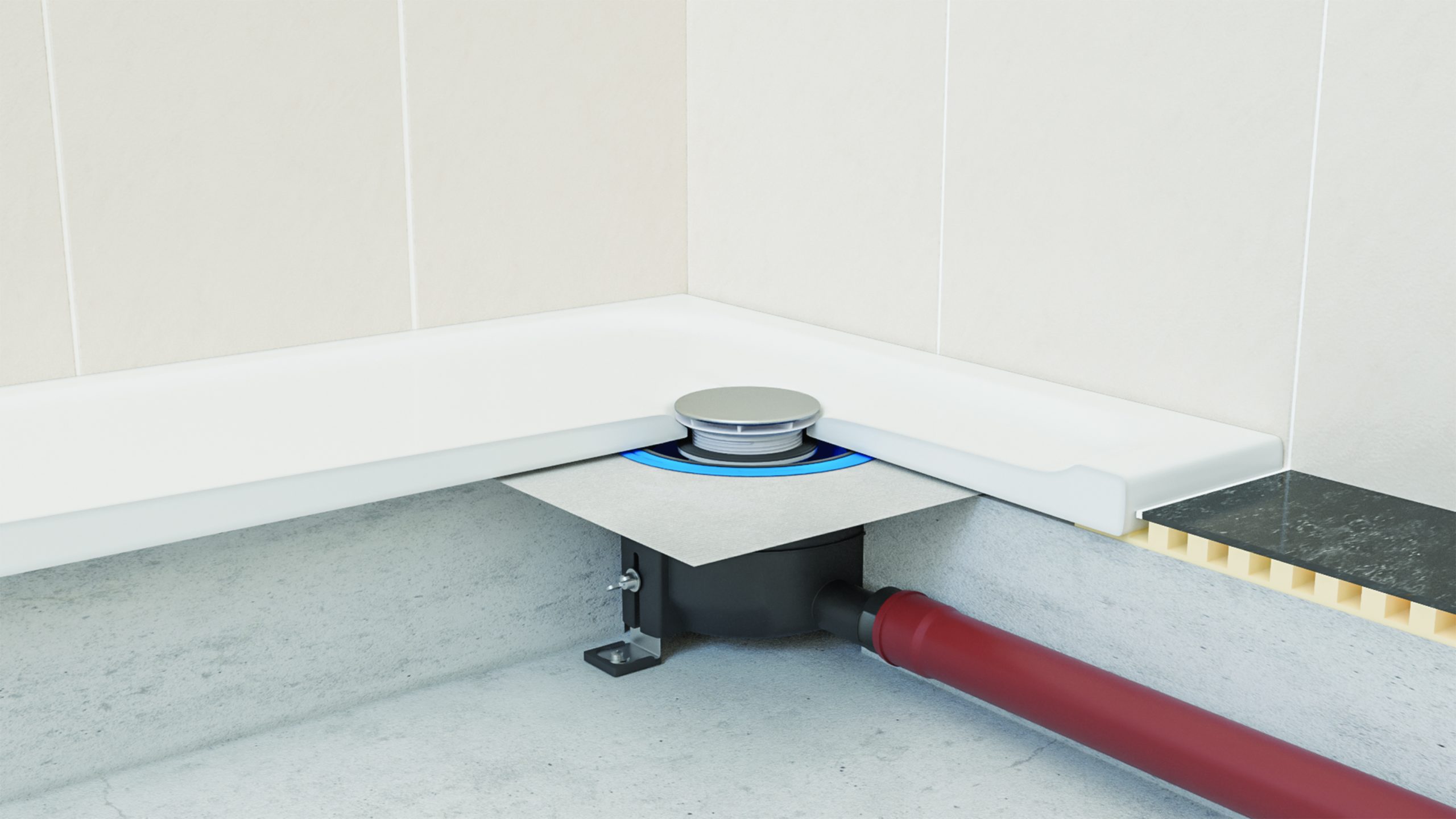
The installation of barrier-free showers poses challenges for both installers and planners. While tiled showers are now state of the art, shower trays are making a comeback thanks to new, flat designs and new materials. Flat shower trays offer technical advantages: their homogeneous surface provides better protection against moisture and mold than tiles. Despite their improved aesthetics and moisture resistance, they do pose special installation requirements. Correct sealing, precise positioning, and secure connection to the drain require the right expertise and the right products to ensure lasting waterproofness.
The biggest risk of complaints for installers always arises where water has to be drained from an open area in the living space. This is the case in a shower, for example. Here, water enters the living space from the closed water pipe system via the shower head and must be drained away. If the work is not carried out correctly, complaints can arise very quickly, as water damage can have far-reaching consequences: damaged furniture, mold growth, and often damage to the building itself. This often involves enormous renovation work and high financial costs.
Design trend: barrier-free accessibility
The trend toward barrier-free, tiled showers further adds to this problem: although tiles offer a certain degree of water drainage, this is not sufficient to guarantee protection against moisture damage. Waterproofing is required under the tiles to ensure that water does not penetrate the wall or screed and causes damage.
Renaissance of the shower tray
However, due to this potential hazard, shower trays are making a comeback. They have no joints/seams, but rather a continuous and homogeneous surface. This provides increased safety and easy cleaning compared to tiled showers.

In addition, modern, flat shower trays offer a wide range of material, color, and design options compared to classic or high shower trays. In addition to classic materials such as steel or acrylic, there are trays made of high-quality composite materials such as solid surface or stone trays in various designs and colors. Another reason for the renaissance of the shower tray is therefore its visual appeal, which has been greatly improved in modern flat shower trays.
Flat shower trays also score highly in terms of barrier-free accessibility: modern shower trays are 2-3 cm thick and can therefore be installed (almost) flush with the tiles.
The 3 challenges during installation
The trend toward flat shower trays is also relevant for tray installation. Unlike deep trays, modern, flat shower trays are often glued directly to the screed. This creates previously unknown problems and challenges with drainage. A visually appealing shower area is important, but it is even more important that the shower water is drained cleanly and professionally. Specifically, there are three major challenges when installing flat shower trays:
- Challenge 1 – Connecting the shower tray drain to the composite waterproofing
When a showertray is installed a composite waterproofing must still be applied throughout the entire bathroom. The particular challenge here is to properly connect the waterproofing to the showertray drain or siphon. - Challenge 2 – No tolerance for errors during installation
If the work is not done precisely and the siphon does not fit perfectly under the drain opening of the shower tray, the shower tray and trap cannot be screwed together correctly. This requires precision work with no tolerance for error. That is why incorrect installation is not uncommon. - Challenge 3 – Tight connection between drain and shower tray
The flat versions of shower trays are glued directly onto the screed (including prior waterproofing) on modern construction sites. This forces the installer to blindly screw the trap underneath with the valve seal. Leaks are inevitable.
Installation boxes – The modern trap for flat shower trays
The change in the design of the shower trays (flat vs. high) therefore also makes it necessary to adapt the underlying technology. Installation boxes are therefore becoming increasingly popular with installers and contractors. These can be used to solve the above-mentioned challenges easily and safely. One example of this is the HL570 Flexbox from HL
We will now show how the installation of a flat shower tray with an installation box (HL570 Flexbox) differs from the classic installation method with a conventional trap and how the Flexbox solves the installation challenges described above.
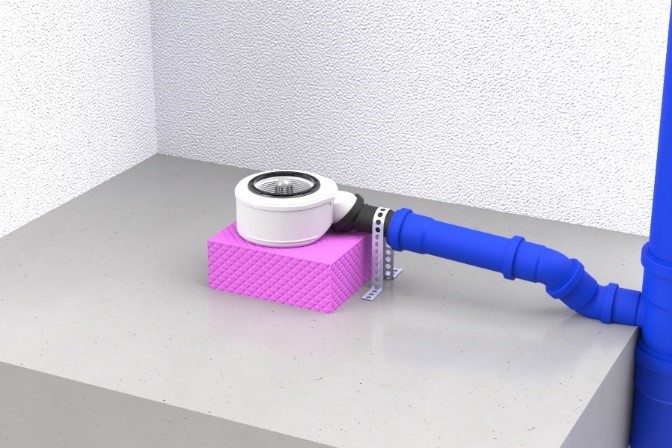
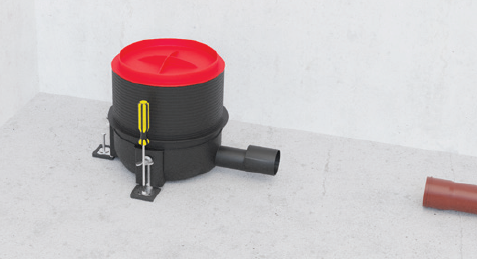
Fastening to the raw concrete
While conventional traps had to be adjusted to the correct height and secured using shims or insulation panels, the Flexbox can simply be screwed onto the raw concrete ceiling and can be secured in place.
Screed application
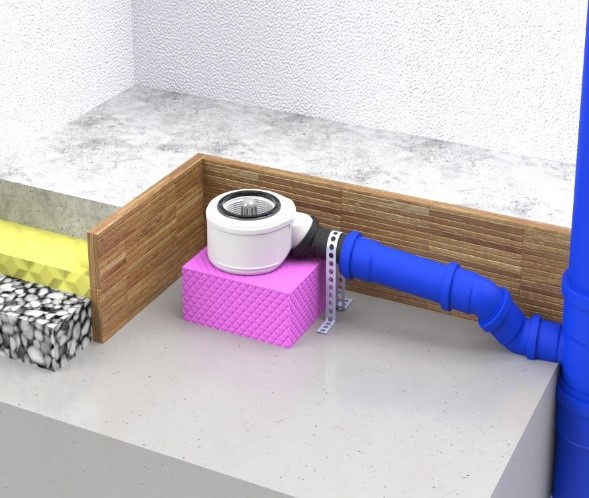
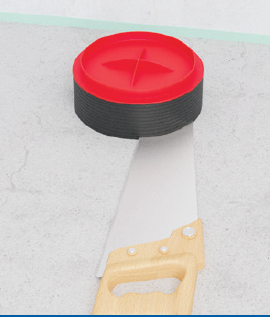
Formwork is also not required when installing installation boxes. The screed can be laid continuously up to the Flexbox drain body. The body is then cut flush with the screed and thus subsequently adjusted to the screed height (see Figure 4). This saves time and money during installation. In addition, a continuous screed without interruptions is ensured.
Integration of composite waterproofing
The first challenge arises when applying the composite waterproofing. If a conventional trap with formwork is used, the trap must now be removed and the entire opening waterproofed. To do this, the composite waterproofing is applied and the waterproofing at the edges is additionally reinforced with sealing tape. This is not only very time-consuming, but also extremely prone to errors.
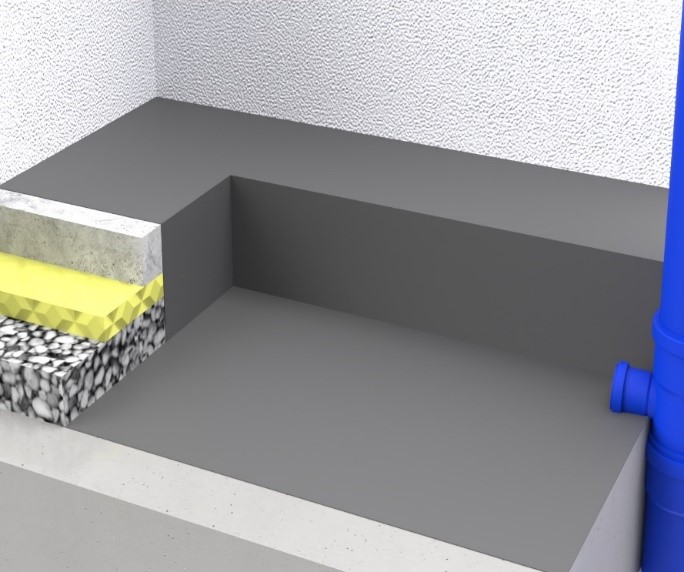
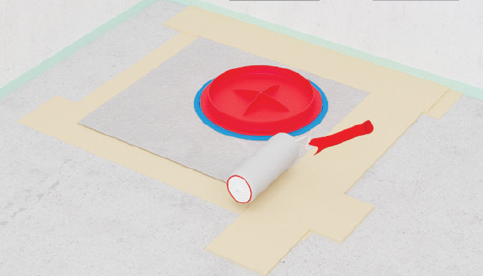
In comparison, with the HL570 Flexbox, only the supplied waterproofing kit needs to be inserted into the drain body and the waterproofing flange is sealed using a sandwich method (Challenge 1 ✔️).
Gluing the shower tray
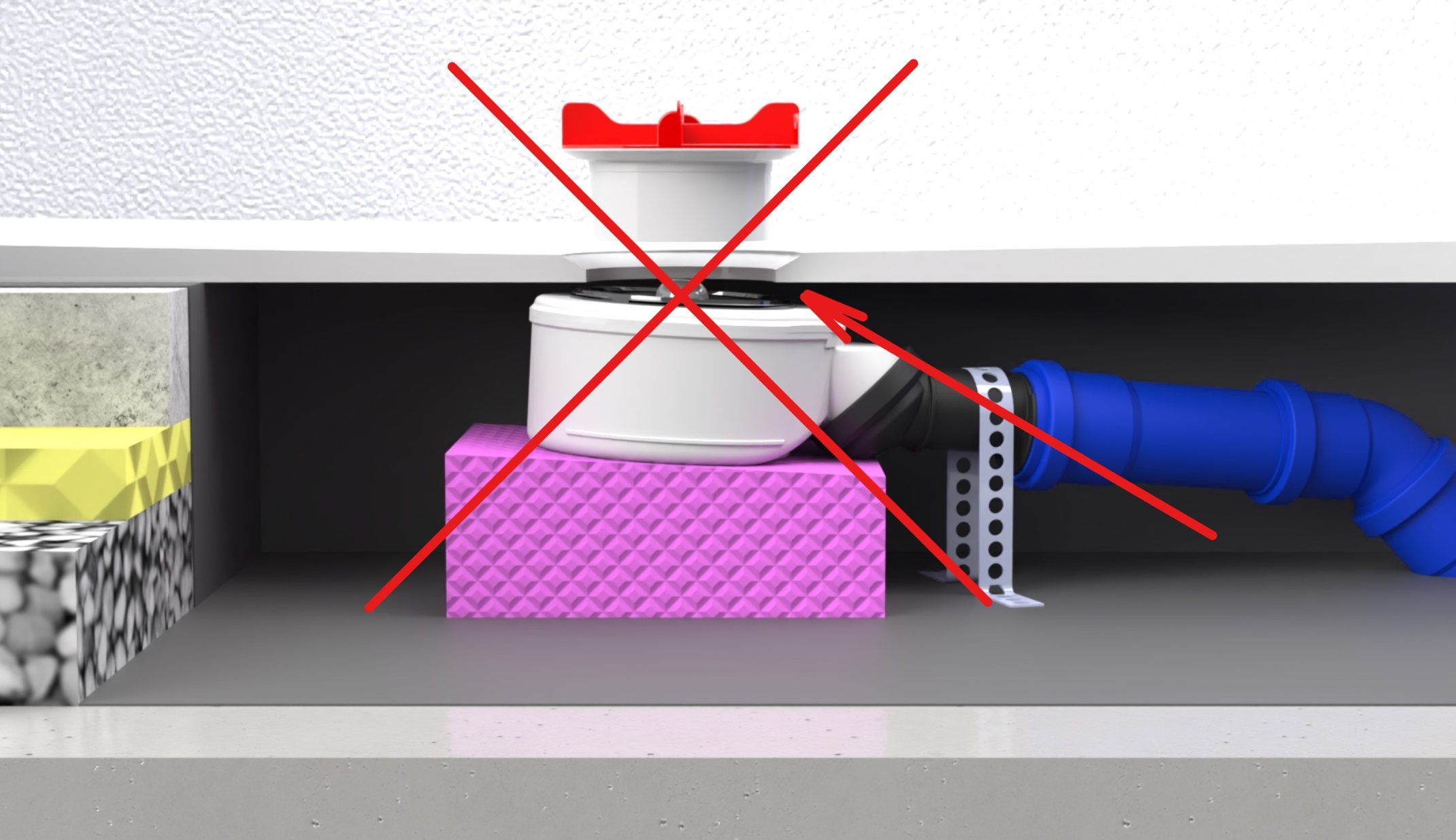
Once the sealing has been completed, the shower tray is glued to the screed or composite waterproofing. This is where the second challenge arises, because with a conventional trap, the work must be carried out with millimeter precision so that the tray opening is positioned directly above the trap opening. If the opening is not positioned above the trap (see Figure 7) and there is an offset, the shower tray cannot be screwed to the trap properly.
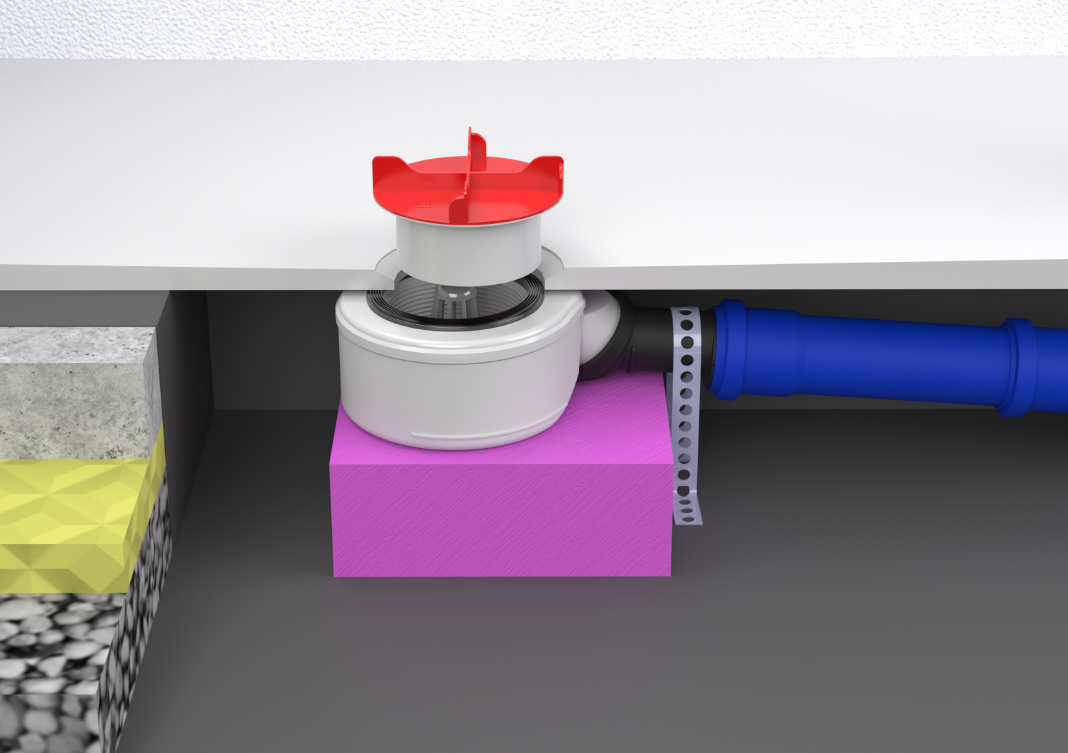
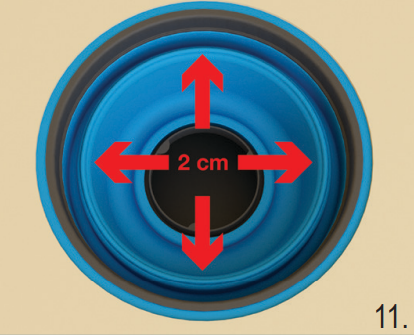
The HL570 Flexbox waterproofing kit is equipped with a flexible element that can accommodate deviations of up to 4 cm (plus/minus 2 cm from the center) between the drainbody and the shower tray (see Figure 8 or, for a more detailed illustration, the HL570 Flexbox installation video). This means that minor inaccuracies in installation are permissible and installation is significantly easier and safer (challenge 2 ✔️).
Connection between shower tray and trap
The final step is to connect the shower tray tightly to the trap. This is where the third challenge arises, because with a conventional trap, the tray now has to be screwed to the trap “blindly” (see Figure 9).
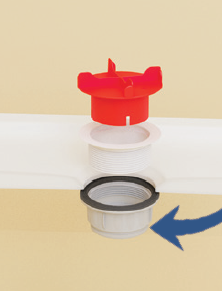
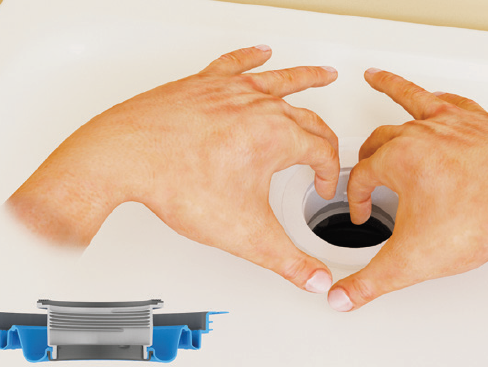
With the HL570 Flexbox installation box, the screw valve can be attached to the shower tray before gluing (see Figure 10), and after inserting the shower tray, it only needs to be clicked together with the flexible waterproofing kit (see Figure 11). This allows for an early visual leak test and ensures a tight connection between the shower tray and the trap (challenge 3 ✔️).
Completion & cleaning
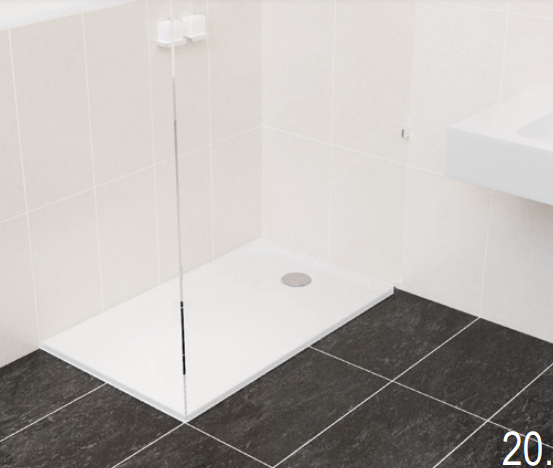
After installing the shower tray, the rest of the bathroom is tiled and the Flexbox can be completed with the removable odor trap and stainless steel cover (see Figure 12). In this respect, there is little difference between a conventional trap and the installation box during installation.
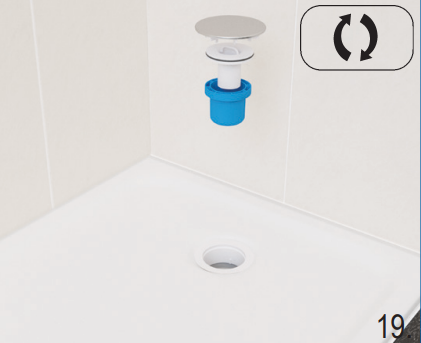
The removable odor trap makes it easy to clean the HL570 Flexbox, for example with a cleaning brush.
Conclusion
The installation of flat shower trays presents three main problems. First, connecting the shower tray drain to the composite waterproofing requires special care. Secondly, the installation allows little tolerance, and even small deviations can lead to errors. Thirdly, the tight connection between the drain and the shower tray is difficult because the shower trays are glued directly to the screed and the screw connection is made “blindly”.
Installation boxes such as the HL570 Flexbox offer a solution to these challenges. They simplify installation, save time and money, and ensure a tight connection between the shower tray and the trap. The Flexbox allows for adjustments to compensate for deviations and enables early leak testing. This makes the installation of flat shower trays safer and easier.
The HL570 Flexbox is compatible with almost all standard flat shower trays and has been tested with trays from almost all major manufacturers. To check compatibility with your shower tray, visit our website and download the HL570 Flexbox compatibility list, or contact our application engineering department or regional sales representative.