

Green roofs are beneficial for the microclimate, optimise the rainwater balance and increase well-being
Climate change is challenging and has many facets. The construction industry is also facing major changes: Conserving resources, minimising energy requirements during operation and the life cycle costs of buildings are becoming increasingly important. In the future, buildings will also increasingly become networked energy generators. In cities, the greening of facades and roofs will also be promoted in order to minimise overheating in summer.
Green spaces as cooling islands
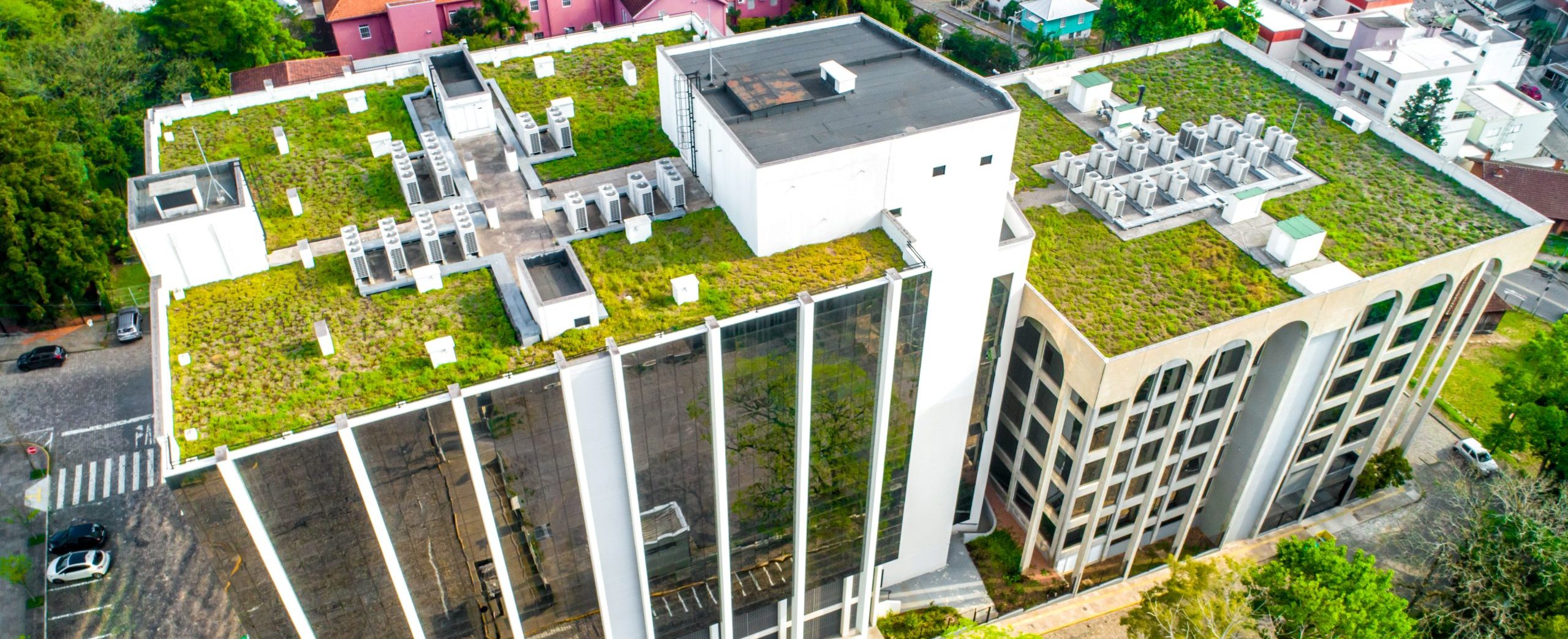
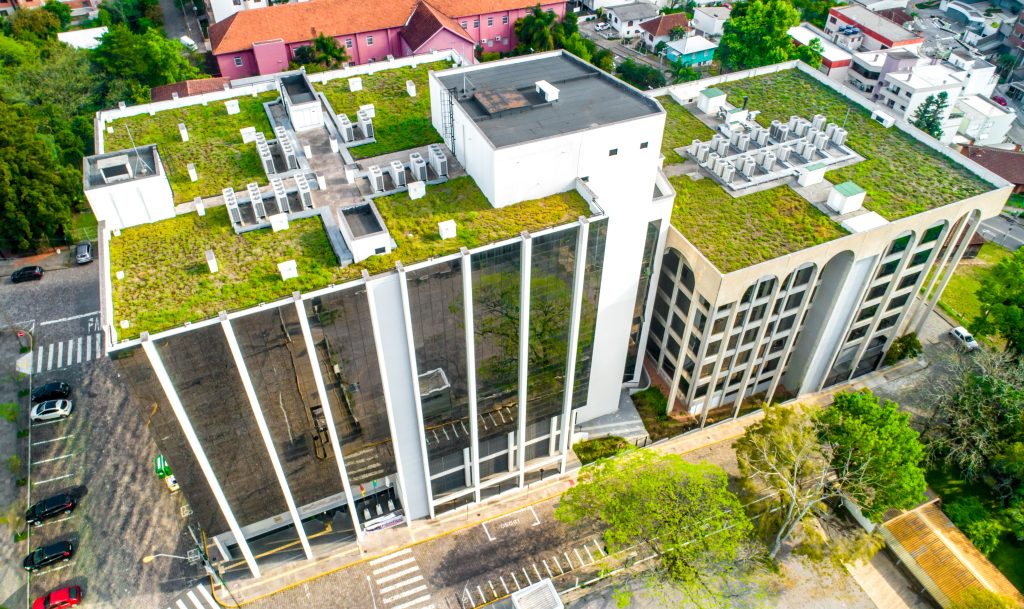
Green roofs fulfil several functions at once. For example, they serve as cooling islands to improve the microclimate. Ungreened building surfaces become significantly hotter than the surrounding air during the day and radiate this heat for hours into the night. Greenery and its natural climatic effects, on the other hand, can significantly reduce the perceived temperature. In addition, vegetation can bind dust and pollutants from the air and thus improve air quality.
Water storage, recreational space & energy contribution
On the other hand, green roofs act as water reservoirs and thus relieve the pressure on wastewater networks, which are often overloaded during heavy rainfall. 1 m² of green roof with a construction height of 25 centimetres can absorb around 150 litres of water. And then there is the pleasant side of a green roof for users. Planted areas give people a sense of calm and well-being. In addition, green areas provide insects and birds with a habitat that is rare in densely built-up areas. And with the help of green roofs and their thermo insulating effect, the temperature inside a building can be kept cooler or warmer depending on the time of year, which ultimately saves energy costs.
Costs for construction, maintenance and repair
The many advantages of green roofs also have disadvantages. The construction costs of a green roof are generally higher. On the one hand, the greening itself incurs costs and the supporting structures have to be designed for the respective weight. In addition, there is an increased maintenance effort, such as watering during dry periods in summer. If damage occurs to the roof waterproofing, costly repairs are sometimes necessary. It may be necessary to remove large areas of greenery in order to repair the roof waterproofing.
Planning, product selection and execution
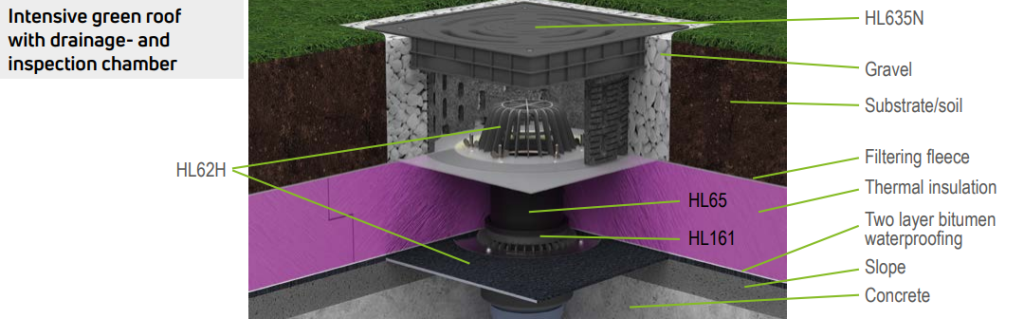
Careful planning is essential to prevent damage to the roof or building in the first place. The use of the right products for the respective application also plays a key role in the realisation of green roofs. Drainage is essential. The subsequent maintenance of the green roof should already be taken into account when planning the roof drainage. It is therefore essential to plan an inspection chamber for roof drains on green roofs. This makes maintenance much easier later on. For this reason, HL has developed the HL635N inspection and drainage shaft, which is ideal for green, gravel and patio roofs.